




The Hardest Tasks, the Hardest-Won Returns: Three Alumni CEOs on the Resilience of China's Semiconductor Industry 2026-09-21
On September 19, three alumni entrepreneurs at the helm of listed companies across the semiconductor value chain shared their perspectives on strengthening China's chip industry at the E Hall Lecture, the flagship lecture series of ACEM's EMBA program, drawing a packed audience. Zong Jian, Tang Tongkui and Zhang Jianwei — all ACEM EMBA alumni — dissected their paths to breakthroughs in an industry navigating the constraints of the post-Moore era.
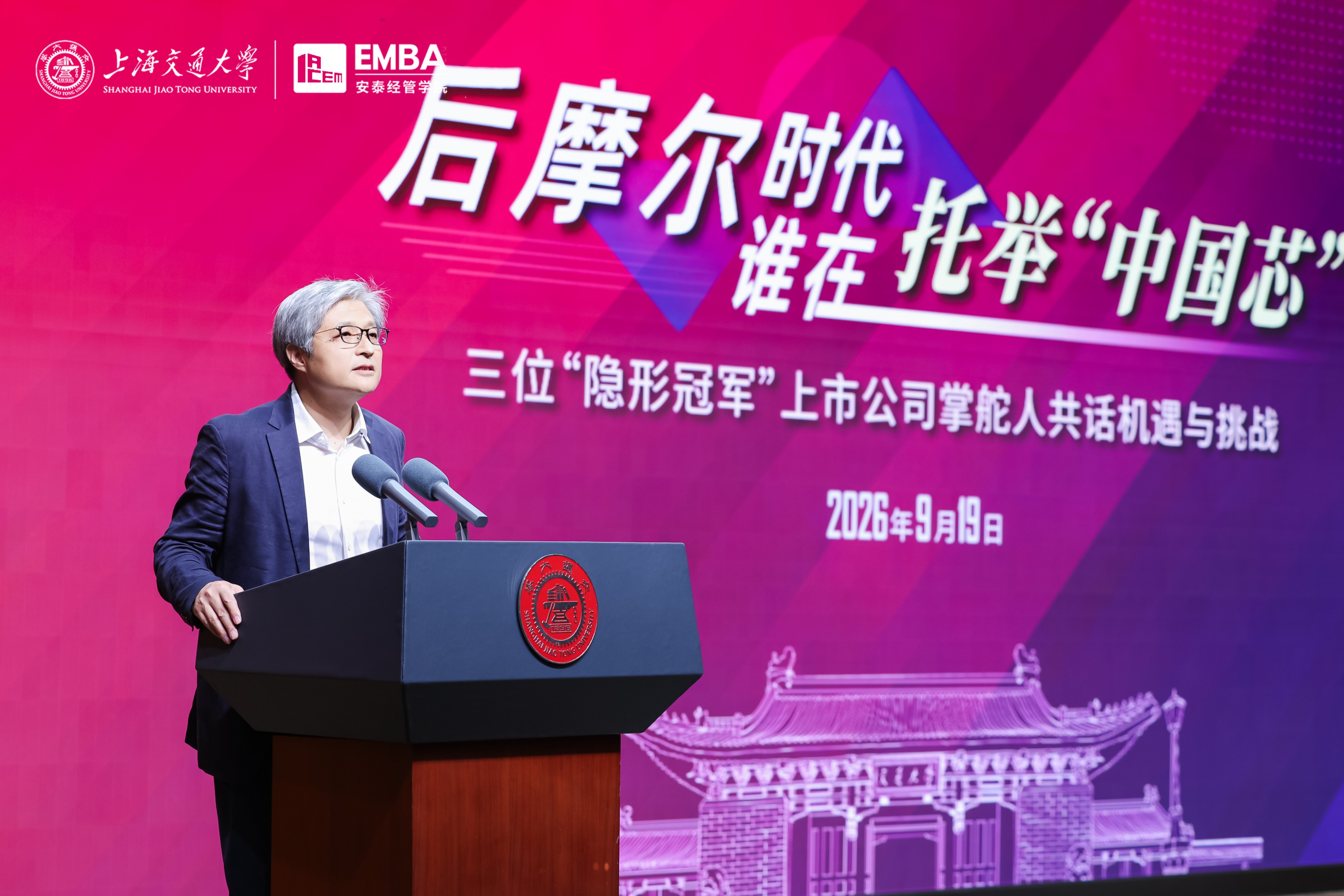 In his opening remarks, Chen Fangruo, Dean of ACEM, said that amid the AI wave, business education must take root in real industries. "We want to bring the real problems and real scenarios of business into the classroom," he said. The lecture series, which invites frontline entrepreneurs to share their experience, exemplifies the EMBA program's efforts to integrate theory with practice. In the AI era, Chen argued, business education needs to advance on two fronts: deep engagement with theory to sharpen insight into business fundamentals, and close connection with practice to address the core challenges facing enterprises.
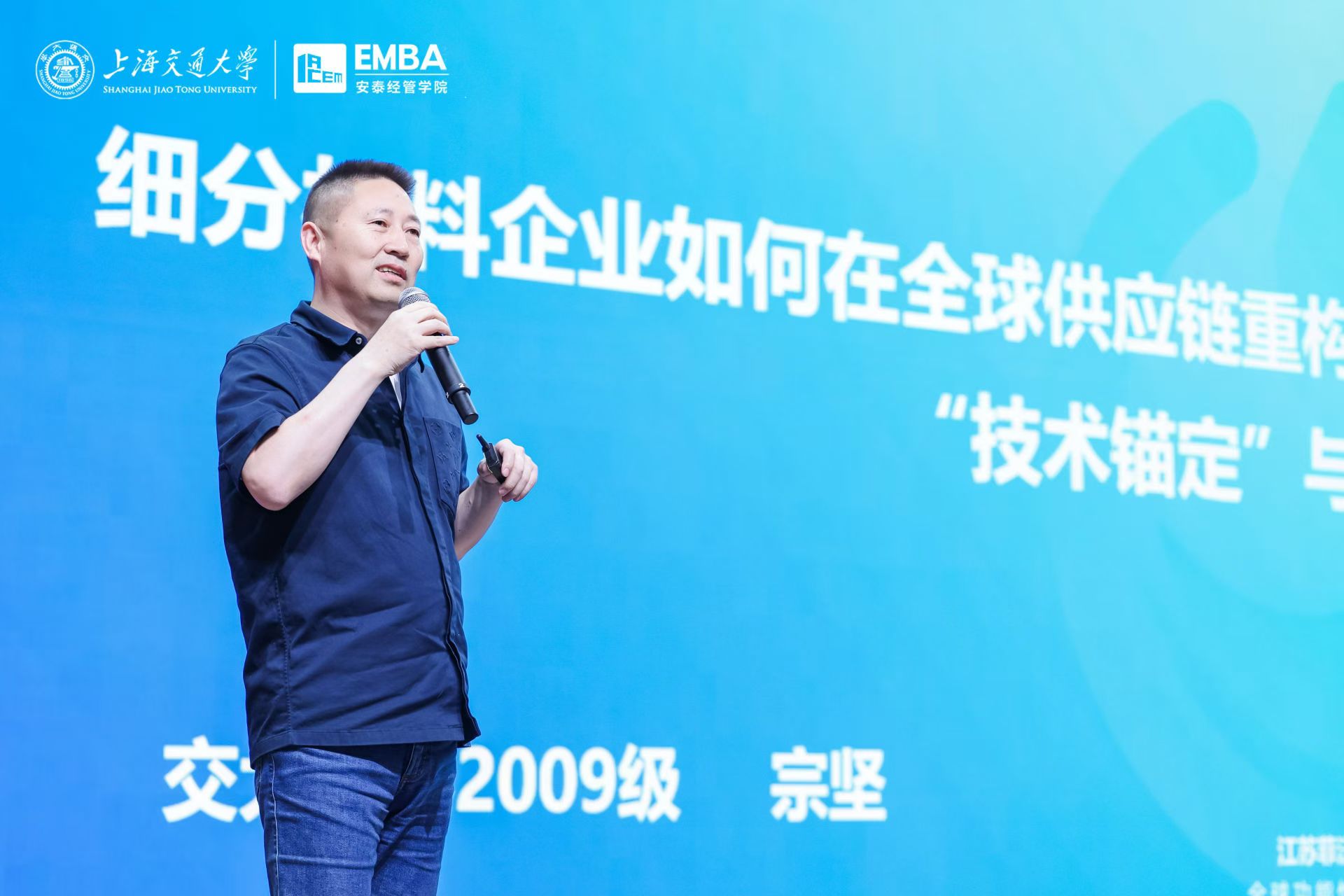 Zong Jian, Chairman of Jiangsu Favored Nanotechnology Co., Ltd., addressed how specialized materials firms can build "technology anchoring and pricing power" amid the restructuring of global supply chains. Favored Nano's PECVD (plasma-enhanced chemical vapor deposition) nano-coating — layers just a few hundred nanometers thick — protects consumer electronics such as AirPods against water and corrosion, and has been extended to immersion liquid cooling for AI servers, automotive electronics, semiconductor processes and optical communication waveguides. Zong, who moved from hardware machining into interdisciplinary integration after his EMBA studies, argued that hard-tech companies must convert technical moats into sustainable business advantages — by deepening basic research, developing proprietary equipment and materials, and anchoring their value firmly in the supply chain.
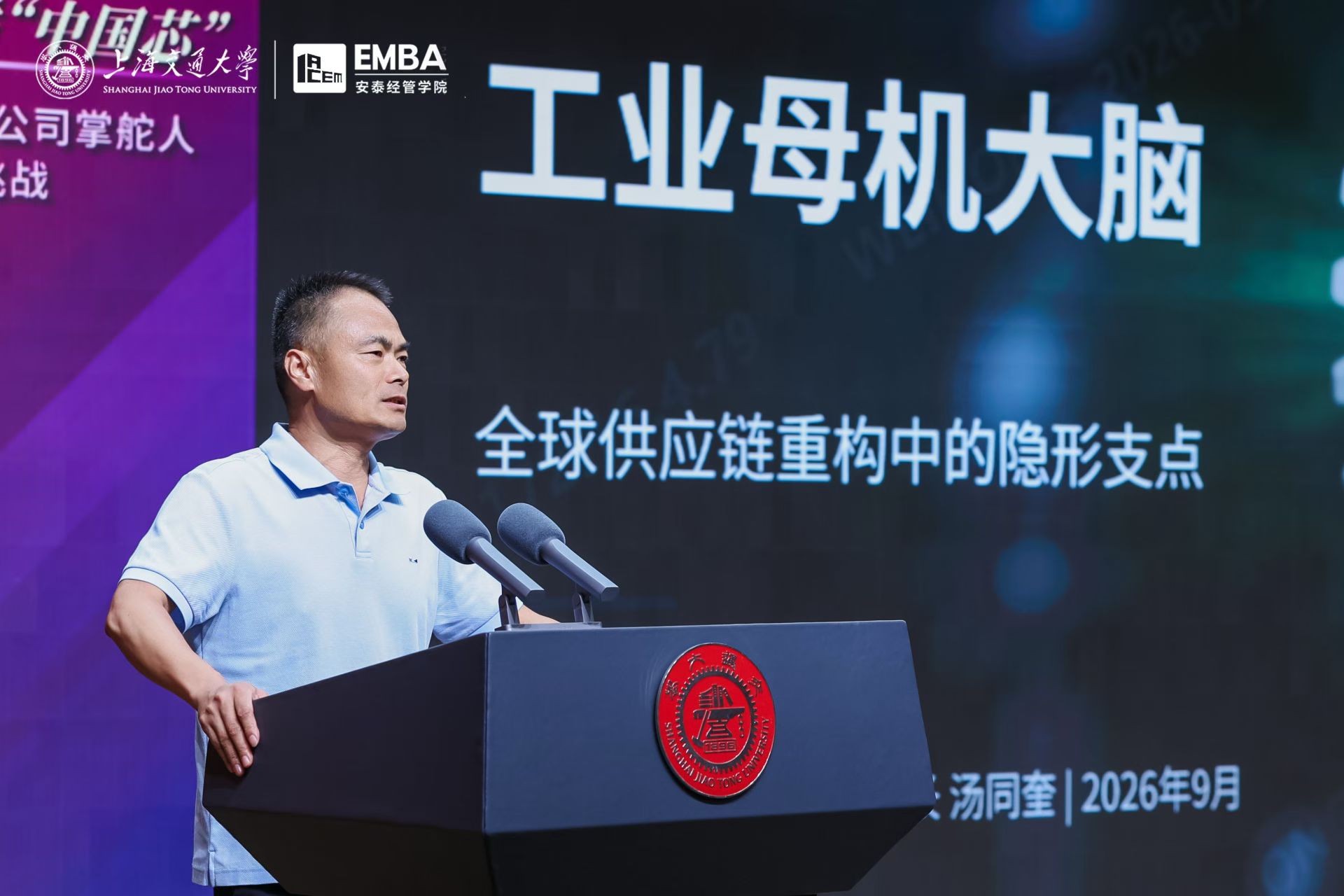 Tang Tongkui, Chairman of Shanghai Weihong Electronic Technology Co., Ltd., focused on the "brain" of machine tools: motion control systems and servo drives. Weihong does not build complete machines — it supplies the control systems that run them. Its NK550 five-axis system closes the loop between control algorithms, servo drives and actuators, and the company has recently extended the same capability to joint motors for the dexterous hands of humanoid robots. Tang argued that the deeper challenge of import substitution lies beyond technological breakthroughs. He framed it as three thresholds: first, make the product; second, make it affordable; and finally, make it fit — integrating into existing industrial ecosystems, from supply chains and maintenance networks to talent systems.
 Zhang Jianwei, Chairman of Keystone Technology Co., Ltd., described photomasks — the "negatives" of chip manufacturing — as a marathon, not a sprint. Having entered the semiconductor photomask segment after the company's 2020 IPO, Zhang stressed that mask-making is not a single-equipment business but a full-process capability spanning materials, lithography, developing, etching, cleaning and defect inspection. He summarized the industry's moat as six gates — technology, talent, customers, capacity, capital and competition — and argued that "strategic resolve determines where you go; industrial resilience determines how far you get." Once import substitution moves into deeper waters, he said, what counts is not slogans or single parameters but long-term persistence: a typical photomask project takes three to five years to build, and five to ten years to mature into a viable business.
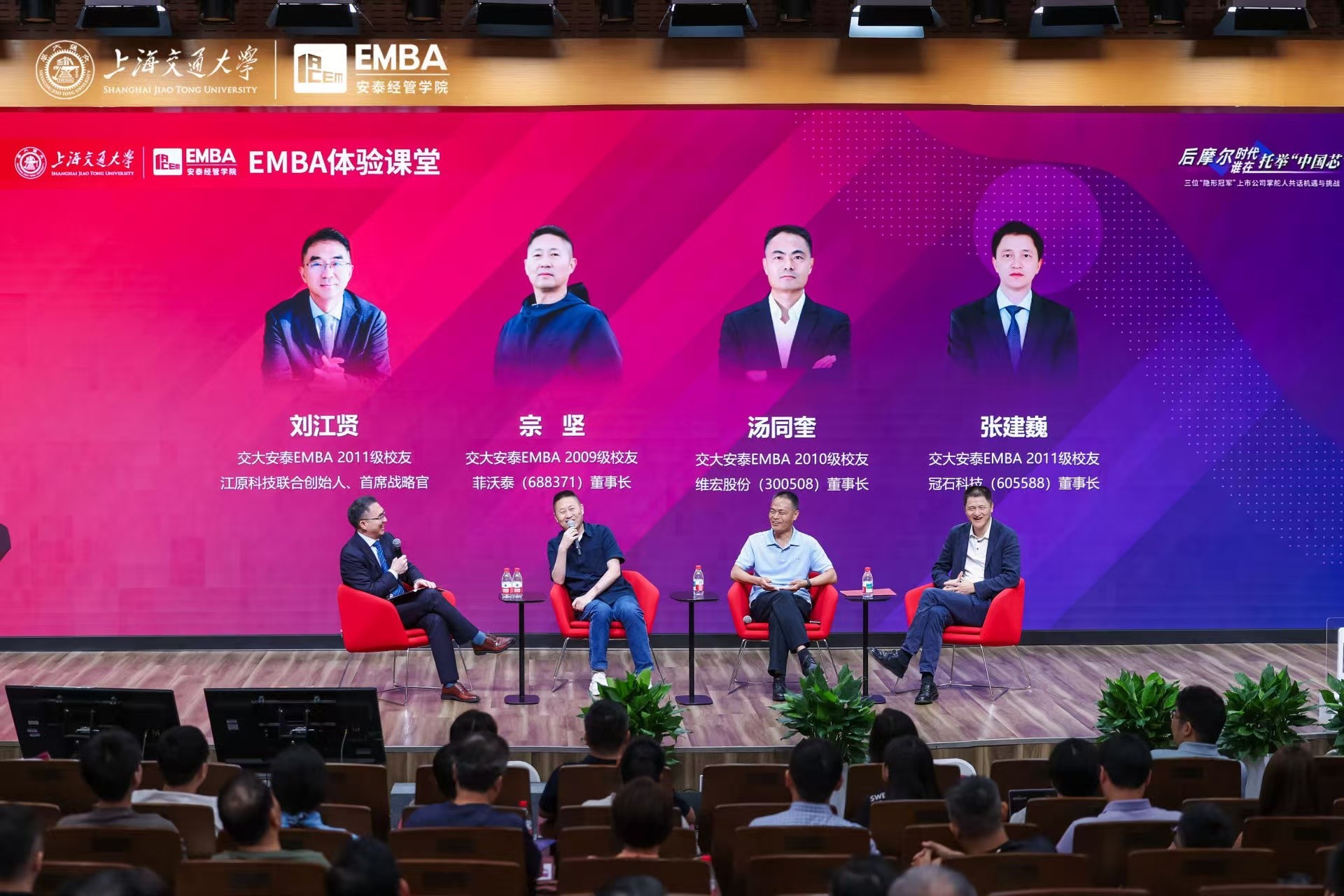 The panel discussion was moderated by Liu Jiangxian, Co-founder and Chief Strategy Officer of Enrigin Technology — himself a semiconductor entrepreneur — who opened with a pointed question: "Self-reliance in science and technology is so hard — why persist?" Zong Jian called it a mandatory question amid China-US competition, arguing that materials and equipment firms must secure both technological voice and supply-chain security. Tang Tongkui noted that Chinese technologists often exceed expectations when given a stage to prove themselves, and that the most pressing task is to break the "dare-not-use" cycle. Zhang Jianwei warned that US and Japanese export controls are extending from high-end products to downstream end products, and that critical nodes such as photomasks must be secured.
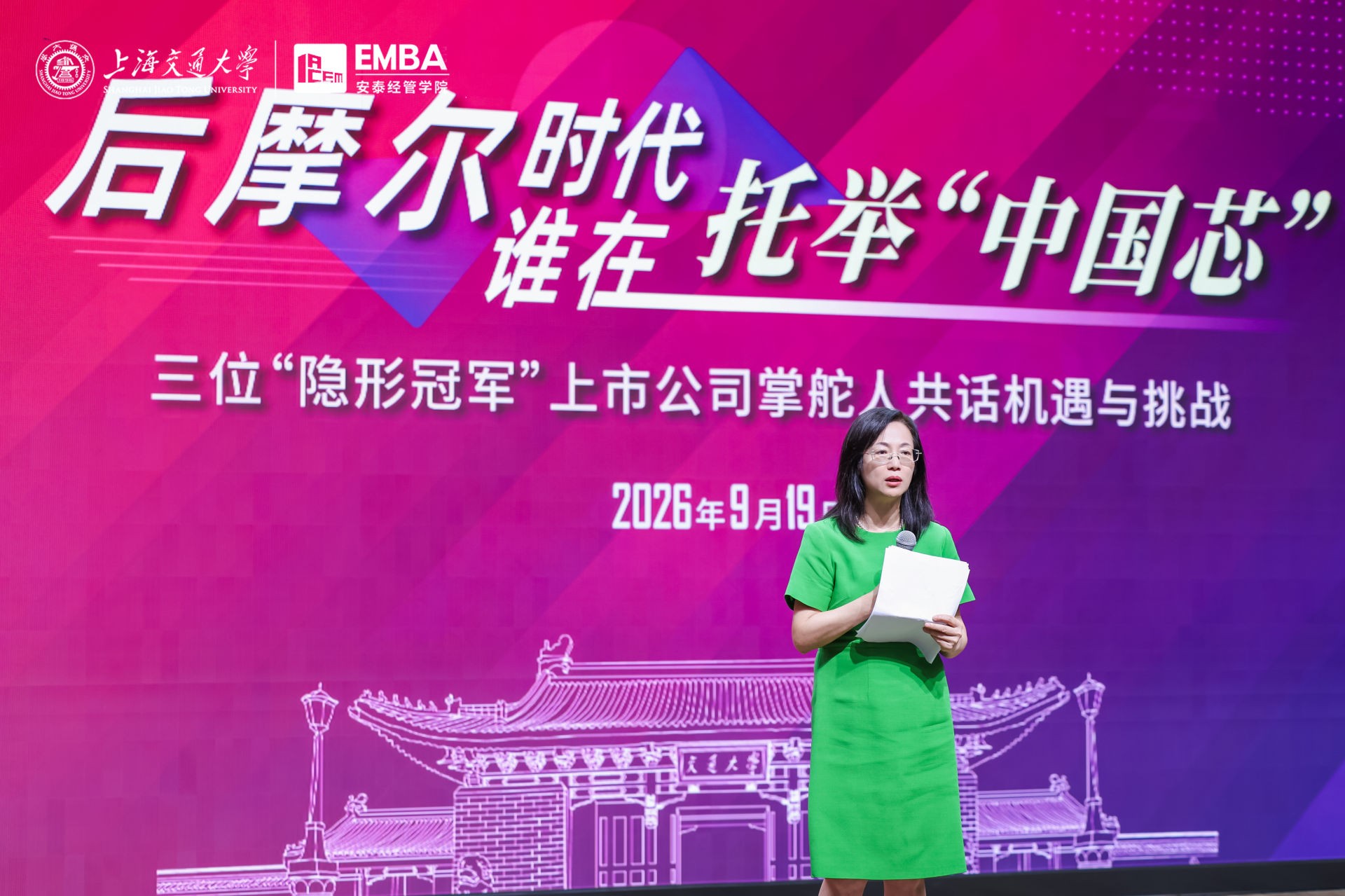 In her academic summary, Zhou Ying, Director of the EMBA Program and Professor of Marketing, distilled the speakers' common traits into "three perspectives" — cognition (moving from "we can make it" to "customers dare to use it"), cycles (hard tech develops in years, not quarters) and systems (a moat spans the entire chain, not a single parameter). She then proposed a "new five forces" framework: technology, driven by hard-core R&D; ecosystem, built with customers and research institutes; focus, resisting blind diversification; innovation, preparing second and third growth curves early; and long-termism, resisting the short-termism of earnings and capital markets. The EMBA program, she said, will continue to turn alumni enterprises into open classrooms, using real problems to feed back into the curriculum.
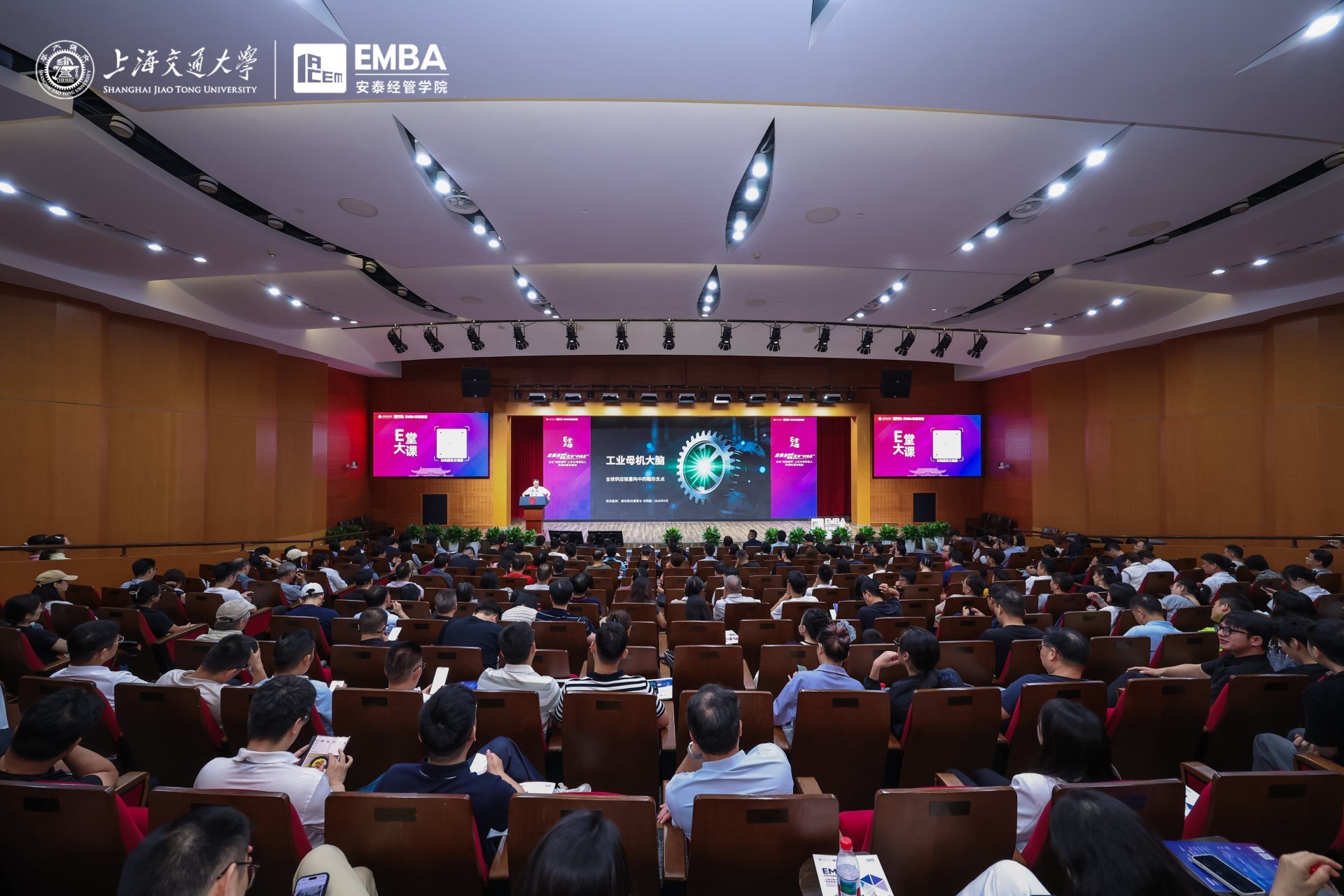 Bringing together industrial retrospectives and a cross-cohort exchange of ideas, the session made the E Hall Lecture an open platform connecting academia and industry — and alumni with one another. In the post-Moore era, strengthening China's semiconductor industry is a systemic, long-term undertaking, and Antai EMBA alumni are advancing it in their own ways, side by side.